Our panel of experts discuss the tasks facing administrators in the face of increasing regulatory requirements
Panel:
Chair: Chris Parrott, Pensions and Reward Manager, British Airports Authority
Heather Quelch, Regional Director, JLT Benefit Solutions
Neil Bolding, Head of Scheme Discontinuance, Mercer
Geraldine Brassett, Client Director, Aon Hewitt
Michael Mann, Director of Administration (Projects), MNPA
Sharon Mitchell, Head of Third Party Administration, RPMI
Robert Wakefield, Associate, Barnett Waddingham
Chair (Chris Parrott): We are currently in a bit of a golden age with regards to administration. Previously this was the poor relation at trustee meetings but now it is recognised as being at the core of all pension activity. There are a number of challenges that have come up and that will arise in the near future, which administrators will have to face if pension regulation is to be met. Let’s start with some of these challenges including the changes to our tax regime in the UK, annual allowance changes, lifetime allowance changes and removal of the default retirement age. How do you feel that you are placed to address those challenges and what steps are you taking to overcome these legislative changes?
Brassett: It is a very wide topic so can we first talk about reduced annual allowance and scheme pays? Working for an administration organisation that has a large portfolio of clients, the first thing to do is to understand which of the schemes we administer potentially have members that will be affected by the change. A significant amount of legislative change at the moment involves a fair degree of compliance but there are also aspects of client choice and it is important from an administrative perspective to understand what those client choices are. For example, we need to see whether our clients are going to take the decision that if an individual goes over the reduced annual allowance they are going to allow them to incur the tax charge or alternatively, are they making changes to their reward structure to avoid members exceeding the reduced annual allowance?
Quelch: It was actually very important to have started looking at lifetime allowance and annual allowance changes this year in quite a lot of depth. For a lot of our clients, it is a case of them actually wanting to monitor. If you are going to monitor you should have started by now and you should know whether you have any carry forward annual allowance from previous years that you can use. However in some ways, annual allowance and lifetime allowance may not be as big a problem as people might have expected but if you take the number of schemes that are actually defined benefit schemes and still open to accrual then you start to know which schemes you are going to focus on.
Wakefield: The important thing is to try and get trustees and the company to talk about the wide range of regulatory changes together and to get everything out in the open, not to just talk about one or two issues.
Quelch: Pension administrators need be thinking about things like benefit statements next year. Are we just going to wait for members to ask for the required information or are we actually going to work with each client to establish their policy?
Bolding: I think that recently we have seen a lot of clients just waking up to these benefit statement and documentation changes. Certainly, in my experience, the trustees previously viewed the lifetime and annual allowance issue as an employer problem and backed off but as it has moved forward there is a lot more interest now, particularly around scheme pays.
Mitchell: It is important to be organised and take a long term view, including sending out regular annual updates about changes to avoid sporadic or ad hoc requests coming in all the time. In terms of the wider ranging issues, we also need to consider related impacts such as DC lifestyling. Communication is absolutely essential in making members understand exactly what affect these regulatory changes will have on them. It is also very much about educating people.
Wakefield: One thing that worries me about all this is that we started off by saying how many members have the regulatory changes affected. But then we are suddenly becoming aware of further regulatory changes arising and broadening what we need to change. I always have this fear about suddenly starting to give members more and more information because a big part of our job is communication, making it as clear as possible and putting lots of time and effort into it. However, this overload of information can prove too much for some and many members can become apathetic about the whole pension situation.
Member communication and technology
Chair: I think you are right. This is all about communication and trying to explain incredibly complex pension issues to people. I don’t believe that we do ourselves any favours in this industry with the way that we talk about certain pension issues at times. So, moving on to member communications, do we feel as an industry that we are better placed to pass on messages about complex things where sometimes even some administrators struggle to understand the topics themselves?
Mitchell: It should be about human interaction, it should be about communicating and having face to face discussions with members of pension schemes at what is an absolutely pivotal moment of their life. Retirement affects everything in terms of their income, ongoing security for family members after death etc so human interaction is absolutely crucial but I don’t think we are particularly good at it. There have been absolute golden opportunities to help people buy in and engage with their pension schemes, but it doesn’t seem to have worked to date. I think as an industry we need to have a fresh approach.
Bolding: I agree. There is still a massive opportunity to improve communication. We are not very good at it at the moment. We use far too much jargon to explain issues when it is not necessary.
Brassett: It is interesting because at Aon Hewitt we have spent quite a lot of time looking at the tone of our communications. We have gone outside of the industry to get someone to help us in this area so we can communicate with members more effectively.
Quelch: I don’t think it is just the tone of the communication. Coming back to the point about people receiving too much information in one go, I think that part of it is trying to tailor communications and communication strategies. So rather than sending out one big wad of information or one big newsletter outlining every detail, the information should be tailored to suit the needs of the relevant people. Online utilities can help members receive more bespoke communications.
Bolding: As well as the ability to talk to somebody at a time that suits the member, online tools are useful for communicating visually, using graphics and modellers, rather than wordy, text heavy updates. This can help members to have a better understanding of their pension accounts. I have seen some good examples of these.
Mitchell: It is also about having a clear understanding of what you want to get out of your communication, what would be a good result at the end of it and are the required goals being met through the communication strategies.
Mann: I think communication will improve generally in the industry with the onset of auto-enrolment and Nest’s efforts to jargon bust and make pensions terminology much more simple for scheme members. I think there is a role for specialist professionals in getting communications right and consistent in particular as we, as administrators, so often see a disconnect between what is said in the Trust Deed & Rules, Scheme booklets and other member communications. We must not get into a situation where how we calculate benefits is confused by different documents and different communications saying different things.
Wakefield: Consultants away from admin should have a better understanding of what exactly administrators have to deal with when there is confusion surrounding a legislative document for example. We have become a society where he have had to complain to go through dispute procedures instead of writing documents and general information in simplistic English that is easy to understand in the first place.
Chair: Do you think we are communicating in the right way then? We need to speak in the language that people speak in and make use of the tools that people use to communicate. These tools are either on the internet, on social media or on a smart phone. Do you think we should be moving to that sort of technology in order to communicate effectively?
Quelch: Definitely.
Bolding: Taking Robert’s point I completely agree. I would much rather see simple statements that a member would understand with a compliance document behind it, than all the different kinds of jargon currently used. Members get lost in this and can make the wrong assumptions for instance – projected benefits are not guaranteed.
Wakefield: Like an appendix.
Quelch: We are finding that the majority of calls that we get from members aren’t particularly to do with their pension figures or their quotes. They are just looking for help. They want to know what they should do with regards to their pension savings, how should they complete the relevant forms and when exactly are they going to receive their pension payments? It is those sorts of things that people are actually interested in. I mean, they are interested in their figures but they are not interested in legislation, they mainly want to know when they are going to receive their benefit.
Brassett: I think it is interesting that we talk about using different media to communicate because I don’t think you can have a one size fits all solution. A communication strategy is required because there is going to be a huge amount of legislation that will need to be communicated over the next 18 to 24 months, and it is no good looking at one method of communication in isolation. A sound communication strategy should drive the content and the way we communicate. Online tools are not for everyone.
Quelch: The biggest success that you ever have in communication is with members face to face.
Mitchell: You have to look at what different companies are doing, and their different methods of communication. Generations are changing and people like to do things in different ways. A lot of communication has to be in the moment, members do not want to have to wait for let’s say five days before someone gets back with an answer to their pension enquiry.
Brassett: The pension regulations do not always help us with communication. For example, if you look at the detail behind the opt-out process associated with the use of e-disclosure and what you need to do to then maintain the records the administration required to support, whilst not insurmountable, does add a layer of complication.
Bolding: DC aside, if you look at DB, I think part of the problem is that people don’t want to engage with their pensions on a daily basis.
Mitchell: The problem with pensions communication is that a lot of people will say that it is 20 or 30 years time before they have to retire so why should they bother now with pension planning? In 20 or 30 years time their attitudes will be quite different and they really will start caring about their savings. If they leave it five or 10 years before they retire to sort out their pension, then effectively it is too late. We need to engage people now.
Wakefield: But with DB, what do we have to do to get people to to take personal responsibility and increase understanding about DB benefits?
Bolding: I think that if there is an appetite to do it, and members of DB schemes wanted to engage regularly, it could be done by sending regular texts and regular emails to help with member engagement and communication. Again, using visual representations rather than text would help.
Quelch: We need to look at focus groups and ask members what they would like to see on the web and what would make them return to consult their pension savings.
Bolding: People take more interest if the information is personal to them. There is a lot of generic communication and members look at the information and don’t really understand what it actually means for them and they lose interest. They think that it is probably not going to be relevant to them. If we send a member a personal statement that includes pension modelling, they will usually take more interest if it is based on their real life scenario i.e. their salary, their expectations and their wider benefits.
Chair: Generic information being communicated is useful just to get an overview of what is happening. If somebody then wants to get some detailed information, at least they have a place to start. Many just want that short sharp piece of information that will satisfy their initial requirements. Our communication is sometimes awful and we have got to do something about that. I personally think self-service is the way forward and I think for those people who have done it in the past it has been a success. Do you think that we are in a position to move forward? Do you think some of our systems are able to do this and how much development do you think we will need, or will be needed to push us forward?
Mann: I disagree. The issue that holds us back on self-servicing is data if we are honest, not the communications media or our systems. If we can get our data up to standard, then we can all get more from our existing systems, and automation. Self-servicing will then naturally flow and advance at pace.
Quelch: I think that technology does always have to be integrated with traditional methods. If someone goes online to buy an annuity or they are going through a retirement process on line, there generally comes a point where they want to ask a question so they should always have the option to be able to speak to an actual person at that point. It is also important nowadays to keep track of people’s change of email address and mobile phone address, since if you are going to text members for example to advise that their benefit statement or payslip is now available to download, then you need to be able to keep in regular contact with them and know where they are.
Data quality
Chair: The word data is continually cropping up. Data is always going to be an issue particularly for deferred members. With regards to The Pension Regulator’s data quality requirements, how are we proceeding with that? Are you finding any difficulties, any challenges that are arising or do you feel relatively comfortable that you are on track?
Bolding: Well, the regulator has announced some statistics recently and said that around two thirds of schemes are on track with their data requirements.
Chair: On track with what exactly? What aspect of their data requirements?
Bolding: Well exactly. I think it was the fact that they have sufficient plans in place to meet the data quality requirements.
Quelch: Personally I don’t think there is a huge issue with common data. The issue with conditional data is that a lot of the legacy information is on paper. So what is required is a resource that will go through these paper files and draw data out from them. If a client is going to be de-risking at any point in the future, they need to be sorting out their data now, otherwise they will not be able to move quickly when they want to buy out their benefits or carry out other de-risking exercises.
Mitchell: Good data should be fundamental to everything that we do. Every quote, every piece of correspondence is based on whatever data is held in the system, so it should be part of an annual on-going health check, it should be part of the governance procedure and trustees should be very much aware of that.
Brassett: As administrators we need to think differently. To me, this is all about return on investment. Inevitably, we are asking trustees, the employer or someone else to spend some money on cleaning this data. We need to make sure that they understand the benefits that will arise from this expenditure beyond simply compliance, such as more accurate valuation results for example.
Chair: Deferred members should not be ignored and still need to be engaged with. For example, shutting a scheme to future accrual means that you suddenly will have 5,000 current employees who immediately become deferred members. You can’t dismiss that group any more and have no interest in them, they are still current employees and you need to service them somehow. Do you think as an industry we have just been lazy with regards to data quality and allowed it to deteriorate?
Bolding: Accuracy surrounding the data would raise the quality.
Wakefield: Data accuracy has to be brought in as part of The Pension Regulator’s record keeping guidance.
Auto-enrolment
Chair: As auto-enrolment draws nearer are you aware of what responsibilities you will have as administrators? Are you in dialogue with your clients about the changes and are you instructing clients to speak to their suppliers i.e. the company?
Brassett: Well, there are the nine guides now published by The Pensions Regulator which is a good starting point and these have provided us with an awful lot of information that we did not have previously. Third party administrators should analyse these guides so that they are clear on the requirements for trustees. i.e. pulling out the trustee duties. There is also the separate but related issue of how third party administrators can support the employer in achieving compliance with their employer duties. What we don’t yet know is how the regulator will monitor compliance around the new employer duties.
Bolding: In general, the larger schemes that we managed are geared up for it now, they have been planning for a while and they have got processes ready or are putting processes in place to meet the auto-enrolment requirements. There is still a struggle with getting some smaller employers to begin their preparations.
The other concern is in relation to the processes that need to be adopted and possibly integrated with HR and payroll systems – still very much work in progress for many. Our experience of supplying an auto-enrolment service to our clients in Norway, for the past five years, has given us a good opportunity to refine our data-management service, particularly to deal with the complexities around exception management.
Quelch: I think it really depends on how you think of administration. Is it just administering the benefits or is it administering the rules of auto-enrolment so that you are working with an employer, and their payroll team, to establish for example who has got the salary level required to be auto-enrolled and who is going to manage the re-enrolment process. Larger clients may well use all of Nest and a contract-based DC and a trust-based DB scheme. Who is going to operate the rules to decide which pension scheme employees of these clients will fall into? Liaising with payroll providers is also essential particularly if they are out-sourced for example. It is absolutely vital to find out what the providers are doing in their preparations and to work effectively with them.
Mitchell: Very aware – we need to be geared up for peaks in workloads, new processes and the impact on existing processes and payrolls. Managing opt-outs is going to be as big a challenge as managing new entrants.
Mann: There are still some big decisions being made with regards to employers budgeting cycles and their finances for next year. There are still some massive decisions to be made about whether employers decide to go with Nest or will use existing pension schemes to meet auto-enrolment legislative requirements.
Quelch: But even for a reasonably sized employer, unless they are trying to keep their costs down, Nest is not really the answer for everyone, is it?
Brassett: It will be important to understand the resource requirements at the staging date, for example, the number of people required to answer the phone and deal with employee queries. Engagement with clients to agree an individual strategy for them is key. If you consider the totality of the legislative change we will be dealing with, then this conversation could cover reduced annual allowance, followed by a reduction in the lifetime allowance, the cessation of contracting out on a defined contribution basis and auto-enrolment. The strategy should include how these changes are going to be communicated to employees and members in a way that they continue to feel fully involved with the whole process.
Wakefield: This goes back to communication. It’s about making sure that we all talk about how we can engage effectively.
Chair: If we turn our attention towards Nest, do you believe that it is going to impact on you as administrators? Do you believe that it is going to be used as a benchmark for schemes going forward? I think Nest is in an incredibly advantageous position as a start up arrangement with no legacy issues.
Brassett: Nest certainly will not accept data that isn’t good quality from the employer.
Bolding: Well, if all goes to plan, Nest is supposed to be the largest DC scheme in the country so that in itself should set the benchmark for schemes going forward. You also hear things about Nest being very e-driven. Will it set the benchmark in this domain? We will have to wait and see.
Wakefield: I suppose from a positive spin then, if more and more people are going to be forced to engage with web access through the Nest pension scheme, then they might realise that they have previous pension scheme benefits and therefore would like to know about that. Nest could actually help with member engagement.
Mann: I am not sure that Nest will find itself in an advantageous position if I am honest. A lot of people will decide to opt in and out of the scheme leaving a high number of small pots to administer. Nest also has limitations in terms of its target market, contribution limits, investment strategy and transfers policy which will make things very difficult for them commercially.
Brassett: I think the sheer number of employers that Nest will have to deal with is going to be the challenge. If I was administering this, it wouldn’t be the number of members that would worry me, it would be the number of employers signing up to Nest. I think it is a challenge but there is no reason why it cannot be achieved.
Wakefield: Nest has to get it right from the start. If they encounter issues early on and there are large numbers of people and employers coming on board, then it is really going to snowball for them and the last thing they want is to collapse because they just can’t cope with the administration levels and procedures.
Outsourcing
Chair: With regard to outsourcing, I still sense that there are two different camps. Those who will say ‘I am forever in favour of an in-house service’ and those that take the view that outsourcing is preferable due to regulatory pressures on pension scheme administration. Are you seeing a growing trend of companies, particularly those that are closing to future accrual, where outsourcing is as a means of dealing with these pressures?
Quelch: What I am seeing in particular is perhaps not the number that you would expect of in-house schemes outsourcing but certainly a bigger push in terms of what I would call shared administration, particularly where you are closing to accrual or you are going through a de-risking exercise. Clients will then actually work with a third party administrator in order to either help staff on site or taking some of the work in-house to actually help them with the peaks and troughs of the workload. I am certainly seeing an increase in this. The size of the teams in-house seem to be reducing to the level required to manage just the core day-to-day administration and it is the bigger projects that we are starting to help with.
Bolding: I would agree with that. We are seeing a lot more co-sourcing, where schemes move to a wind up situation, keep an in-house team to deliver the day to day services and then outsource the specialist duties because they don’t have the capacity or skill set in-house.
Quelch: Or where they are changing to DC for example and they don’t want to recruit a DC specialist, they might keep the DB scheme in house and outsource the DC.
Mitchell: That really is the first step towards full outsourcing. In-house schemes can be very costly for companies and it is a huge task in terms of keeping the technology up to date. If you are running an in-house scheme you have to know about everything and there are key risks with that. A lot of companies are thinking that it is not something that they want to continue with and they really do want to outsource even if it is just for risk management purposes.
Brassett: The pool of DB and DC skills in the market continues to shrink. There are less and less people who know how to carry out manual calculations and there are still people in the industry who do not fully understand how DB schemes operate. I think that this will continue to drive outsourcing as well.
Mann: From a DB point of view it is now a no brainer to outsource. For example with pension savings certificates being produced next year, amongst other complex legislative change, now means that employers have to build up a huge amount of technical knowledge in-house about its pension scheme. It is a massive amount of energy to spend on something that is probably not core to their business success. If you outsource to a third party administrator they have the expertise and economies of scale to take care of that burden and distraction for an employer. Also with auto-enrolment coming on stream employers will have the additional added pressures of this new beast to tame, requiring even more energy. So, if employers still have anything DB legacy wise in its locker, it may as well outsource it to a safe pair of hands that can look after it for them, and let them focus on the things that really matter.
Wakefield: I actually get CVs from people working in-house wanting to move away because they are feeling restricted and they feel that they are not getting the right support or the training they need. This potentially undermines the knowledge base that is being left in-house.
Chair: Do you think that we are going to continue to struggle to attract the right people to conduct the administration of pension schemes?
Bolding: Certainly, in the area of legacy DB, technical expertise is dwindling. I can’t see how you would be able to attract talent into an industry which is declining from a DB perspective. That just means that the specialist knowledge becomes diluted even more. Also, as we move towards more wind ups, this specific skill set is even harder to source.
Chair: With all the pressures that are on pension operators these days it is almost impossible to keep up with everything. Do you think that the drive through to outsourcing is due to increased regulatory framework? Or is it simply a cost factor?
Mitchell: It is a mixture and cost shouldn’t be confused with value for money.
Quelch: I don’t think it is driven by cost. An in-house pension manager can always come up with a costing that will show that it is cheaper to do in-house administration than outsourcing. It is not cost in terms of the price, it is cost in terms of the risk in terms of issues such as technology and the quality of staff. It very rarely comes down to how much the company is paying in pounds for that service.
Bolding: I very rarely see any potential outsourcing opportunities driven purely by cost. If it is the motive, then it becomes a risky exercise, for various reasons. Outsourcing is usually around core business strategy and risk management/mitigation.
Mann: I think there is an argument on cost grounds, an argument on reducing risk grounds and an argument that it will give you better customer service. No doubt, you will get a better service from a specialist pension’s administrator because of the wealth of knowledge that they offer and the on tap technical support that is readily available to them.
Brassett: Pension strategy plays a big part in the decision to outsource. Declining DB schemes or declining trust-based DC schemes also leads to outsourcing.
De-risking
Chair: What role can administrators - and do administrators - play in the de-risking strategy for pension schemes? Michael, you have already mentioned enhanced transfer value exercises?
Mann: These are trying and testing times for trustees and their membership because enhanced transfer value exercises and pension increase exchange exercises have the scrutiny of the regulator all over them to make sure that trustees implement them fairly and correctly, adopting the right procedures. Administrators can no doubt help support these de-risking exercises through proper project management and making sure that they are completed in line with the trustee’s wishes. Administrators now have the experience behind them of completing a number of these exercises and as a consequence they can add a great deal of value to the process of completing these exercises efficiently, in particular if they are involved in them from an early stage.
Quelch: The biggest thing as an administrator is working with your own consultants and actuaries to keep you in the loop about de-risking activities. Otherwise it is very difficult for an administrator to provide data for a PIE or an ETV exercise. Data and data quality is key to this.
Mitchell: Encouraging regular dialogue around data quality!
Chair: With this de-risking point in particular, which are generally company driven exercises, are you finding that companies are coming more to the fore in the relationship between them and their administrator?
Mann: I think it is a partnership. The trustees do pay our bills so they are the drivers, but we now have the interfaces with the company, often the finance director and those advising on the de-risking strategy from a corporate point of view to work with. In addition the actuary could be heavily involved in particular if the aim is to improve the pension valuation data of a scheme to reduce liabilities.
Wakefield: Administrators must get a grip with company representatives at meetings if there are long-term aims of de-risking and also try to get the company to buy-in to help with data issues for example. Administrators must promote themselves in a better way and underline the roles that they can play in helping on the corporate side of things.
Mann: Traditionally, the actuaries and consultants have been the ones that companies have turned to for advice with these exercises with the administrator being considered and involved very late in the day. I think that approach is now changing in that trustees are starting to recognise that administrators have seen a whole raft of buy-ins, buy-outs and ETV and PIE exercises so now recognise the fact that we have gained a lot of knowledge and experience and are bringing value to these exercises which is great.
Bolding: Administration has a huge part to play in any de-risking strategy. For example, a large focus is on the assets, but what about the liabilities, are up-to-date and accurately reflected?
Looking ahead
Chair: Looking ahead to the future, what do you see as being the next big challenge for you as administrators? Or is it just a case of business as usual?
Quelch: I think if technology continues to move along at the current rate, the role of the administrator is going to change from that of a number cruncher to a trusted support to the trustees and members of a pension scheme. Administrators will have to be far more technically proficient than they are now. They will have to know about legislation, how benefits are calculated and how to actually provide member service as opposed to just dealing with people over the telephone. The challenge is how you attract people into this profession. With auto-enrolment coming, administrators will have to deal with Nest, contract-based DB, contract based DC and DB legacy issues.
Wakefield: The pension administrator professional will have to have broader skills, good communication skills and will have to probably just become a more specialist type of consultant on a personal level with clients and members rather than the consultant which we associate with scheme advice.
Quelch: A lot of our basic day to day work processing is carried out off shore now. These are people who are very highly qualified, who take a lot of pride in their work and who are taking the pension management exams. That actually leaves the equally qualified and professional staff that work in the UK more free to manage the member experience. So I think that is the future.
Mitchell: I am not really a fan of offshoring at all. I don’t think it works in bespoke areas like pensions administration. The pensions landscape is continually changing and our biggest challenge has always been and will always be managing change. In general, pensions administration is reactive and this approach introduces time pressures and half-hearted solutions. We have to engage more with our clients, understand what their strategic plans are, and put in place effective strategies for meeting the regulatory, business as usual and ad hoc work that will be generated.
Mann: I think once auto-enrolment comes in we will still be busy as we deal with opt-outs and consider auto re-enrolment. I also think we could see the abolition of DB contracting out on the back of DC contracting out ceasing next year, and that may well occur in the next five years. There will also no doubt be a lot of further activity with de-risking and schemes looking towards an end game. I also personally believe that trust based DC schemes will fight back over the next five to 10 years as strong governance vehicles. Finally, we also need to be aware of the so-called super providers such as ATP getting involved in UK pensions over the next few years and how this might change the market we work in.
Bolding: Administrators will become a source of deep technical DB knowledge, combined with being trusted partners to clients. If we put the current challenges to one side i.e. data, tax changes etc, we have things like GMP equalisation and the potential DB end game to look forward to!
Wakefield: I think education is essential for a positive future. Do we have responsibilities as pension professionals to try and push this? I think we do and we must accentuate the fact that financial education is crucial.
Brassett: I think you are absolutely right. How do we make people understand the need to provide for themselves when they are older?
Mann: I think moving forward it is going to be increasingly difficult for people to put any money into a savings product or saving strategy from an economic point of view. Convincing them that this is the right thing to do will become even tougher in my view.
Quelch: But they have got to because otherwise we will all be in a situation whereby you will not be able to retire or stop working until you are 70.
Chair: I think there are some incredibly difficult challenges coming up. Everything seems to be driven by data.
I cannot see pensions becoming anything other than higher on people’s agendas, it is not just company agendas, but individuals are going to be forced to make a decision one way or another. I think we are in a position where I hope we can support people through this. I worry that we are going to have more regulation coming in, I worry that auto-enrolment will be the next big issue that undermines people’s confidence in pensions, but the one thing that I am more and more appreciative of is the skill set that you as administrators need to have to deal with the challenges that you face. You have to be many things to many people, not just a number cruncher.


Latest News
-
DWP launches consultation on DB surplus release regulations
-
FCA and TPR seek closer alignment on guided retirement and targeted support
-
DWP to remove overseas investment amber flag as part of pension transfer changes
-
Government to publish updated pensions roadmap 'shortly' - Bell
-
Industry welcomes pension transfer proposals but calls for guidance
-
Resolution Foundation proposes ‘smoothed’ earnings link to replace ‘unsustainable’ triple lock





CDC in the UK pensions market
Pensions Age editor, Laura Blows, talks to Sophie Dapin, Director, Institutional Solutions EMEA at BlackRock, and host of BlackRock’s Rewiring Retirement podcast, about the growing interest in collective DC in the UK pensions market
Podcast: From pension pot to flexible income for life

Podcast: Who matters most in pensions?
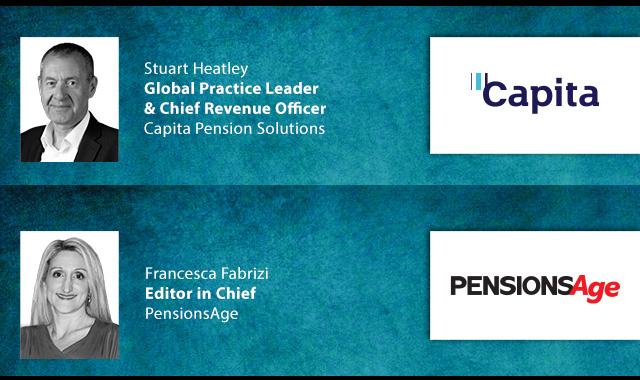
In the latest Pensions Age podcast, Francesca Fabrizi speaks to Capita Pension Solutions global practice leader & chief revenue officer, Stuart Heatley, about who matters most in pensions and how to best meet their needs




© 2019 Perspective Publishing Privacy & Cookies
Recent Stories