Topics discussed included: the impact of falling interest rate cuts on cash funds and providers' bottom lines, the growing transparency of costs in SIPPs, regulation, and how the investment choices available to SIPP investors have changed over the last six months as the full extent of the bear market has come home to roost.
ECONOMY
Chairman: What effect has the downturn had on the SIPP market so far?
MacGillivray: For us it's had no effect as yet and business last year was quite robust - of course it was boosted by protected rights in October. Our concerns for the current year are that individuals saving for their pensions may, just because of the credit crunch, defer their pension contributions.
Tilley: There's been very little throughout 2008 but there will probably be a slowing of new business numbers in 2009, but for the future, in the same way that the equity market anticipates recovery, it's the type of investments that are possibly used within a SIPP that might also anticipate a recovery.
Morrison: It's not about bringing more money in - there's still a lot of consolidation from insured plans into SIPPs. So people are using SIPPs as the wrapper and they still need advice in bringing money across.
So that probably keeps the pensions industry as a whole fairly robust.
Moret: IFAs are threatened not just by the economic climate, but also by regulation and transfers. It has become more difficult for them and we'll find more advisers actually shying away from the SIPP market. New business volumes are likely to reduce because some are simply not prepared to take the apparent risk posed by FSA putting transfers under scrutiny again.
Patterson: It is clear that the massive increase in SIPP business since A-day was bound to have some ramifications on a regulatory front. It may be that in the majority of funds they just need to do some catching up or due diligence to another firm that specialises in that field.
Tilley: This is the first time that the FSA has actually come out and said this is what we are looking for, which is a positive move.
McGowan: Their examples of good practice go much further than any guidance they've given in the past about what transfer advice should look like. And they are firing clear warning shots with examples of bad practice.
Chairman: How does extra regulatory scrutiny fit into the picture?
Moret: If I was going to criticise the FSA report, it would be that it generalises around SIPPs whereas there is in my opinion a growing divide between the collective type SIPP and the bespoke SIPP.
McGowan: What will be interesting is how much the FSA is prepared to engage with advisers in debating the issues they've raised in their report. Or do they expect to use the forthcoming adviser meetings to simply deliver a message?
Tilley: There's also a very tricky situation that stems from the FSA's guidance notes. If you are using the argument to move to a SIPP to work out a range of investments, how soon have you got to be immediately using those before the FSA says 'well, actually, you didn't need to move into a SIPP now, you could have actually accessed where you are now through the existing vehicle - you should only have opened up a SIPP when you needed it'? It's more about being in the right SIPP at the right time.
Patterson: There certainly is a case for having a SIPP that has two tiers of service and the investment access. We know that the FSA is looking for what due diligence processes are appropriate and necessary and we can assist other forms to treat customers fairly.
MacGillivray: From a provider perception, we've seen this for some time. The 'fit for purpose' option, which is all online trading, and run through an investment centre, can be a competitive and cheap way for people to get into the SIPP market and to get a reasonable choice of funds. And the growth of that side of our business has been phenomenal.
McGowan: It has to be good news for the market that there is such a wide choice of arrangements. In the short term though, it can be difficult to predict the impact that the FSA's scrutiny might have on different types of SIPP or pension plan.
MacGillivray: Choice is good, but it comes back to advisers making sure that they know it's the best advice and to take the time to check the reasons for going into that type of structure are best for the client and there's good reasons for doing it.
McGowan: Another area the FSA has flagged up where the industry needs to do more is transparency. The review highlights the importance of setting out the features of the old plan that may be of benefit and compare them like for like with the new plan. Where the new plan is not transparent, many advisers will be unable to assess what value it offers. So disclosure on SIPPs really does need to improve.
COST
Chair: What will current economic conditions mean for the cost of a SIPP and the transparency of those costs?
Moret: The costs in the bespoke area are very much dependant on the investment strategy, investment transactions and so on, so to generalise is difficult. The other aspect is clarity in terms of disclosure. That certainly is an area where either the industry is going to have to do something quickly or else risk that the FSA will come up with a very prescriptive approach. The thought of the FSA prescribing how you disclose your charges is unattractive.
McGowan: While we know that many SIPPs offer good value in may circumstances, there needs to be greater transparency. Transparency is certainly not consistent across the industry and at times not good enough.
Morrison: Going back a few years we tried to build in a panel of five or six discretional managers into an administration programme and you got them to send the tariff through of what they charge for what event and you've got five or six different tariffs. Trying to put that into an illustration system was virtually impossible because charges are for different instances, tiers of services, corporate actions and it was a nightmare, so the fact that we have a diverse market of how people charge their investment services, bolting that onto the SIPP wrapper isn't exactly an easy mix.
Patterson: Ultimately I can't see the solution to that because of the diversity of investments which can be involved and the diversity of the method by which the managers are taking their charges. To try and encompass that into an illustration seems to me to be an unrealistic ideal.
Morrison: But then we come back to the point about the short learning curve for some advisers coming into the SIPP market. You've got some people who have come into the SIPP market perhaps being faced by a discretionary manager and they don't really appreciate how that tariff or charge really works. For some new people coming in, it's the first contact they have ever had with a stockbroker or a discretionary manager and they haven't quite got around how the charging structure works.
Patterson: Obviously the function of the Regulator is to protect consumers and if there are advisers who don't fully understand what it is that they're recommending then you'd have to ask should they be recommending that in the first place. It's really not the Regulator's job to do the adviser's job, that's for sure.
Tilley: I applaud the idea of separating the cost of the wrapper itself from the investment side of things, but at the lower end of the market that's just impossible.
Moret: We shouldn't also forget that there are hidden charges both on insured contracts and on SIPPs - interest rates, for example. I was thinking a while ago that I was attracted to the idea of showing the cost of the wrapper and then the investment charges separately on top, but the more I looked at it, the more problematic I thought it was going to become in terms of trying to compare across all types of SIPP.
Patterson: It's interesting looking at the review itself. The issue for the FSA was not costs per save, it was unjustified costs, so when you're looking at costs, however you look at it, whether it's through illustrations or through separating the cost of the wrapper out from the underlying investments, or the case studies, it's the same thing. My concern with the case studies is that they pretend to be static, whereas people change.
MacGillivray: We carried out a review exercise last year looking at the actual investments held within our range of SIPPs and the thing that struck us was the number of people who just had a portfolio of collectives and cash in a SIPP structure that had annual fees. The charges they were paying on that compared to something like our eSIPP - the eSIPP is where they should have been. It's important that the actual charging structures are reviewed on a regular basis.
Tilley: The SIPP community has met with Defaqto on a number of occasions. While it is regarded as being a tool to assess the market and as it does very well, there is still a very large gap in the information it can provide for advisers in terms of what it will look at. Headline fees for certain things but it won't dig deep enough and the FSA is now actually requiring advisers to obtain that lower tier information.
INTEREST RATES
Chairman: What about the impact of current interest rates on the provider's bottom line?
Tilley: Interest rates will go lower before they get better. It's not uncommon for a SIPP provider to take maybe a 0.5 per cent trail on an interest rate, sometimes higher on the lower balances. Where you've got base rates at five per cent, interest rates at that sort of level, 0.5 seems palatable. But when you've got base rates down to 1.5 and headline interest rates beneath that, you see the client losing more than a third.
MacGillivray: Of course there are the issues of what happens if the base rate does hit zero. James Hay have already confirmed that they will not charge for holding cash deposits should the rate go to zero.
McGowan: The good news about that is in moving forward the transparency debate in the industry. This increases understanding of how charges are taken and how providers earn their income. It does strike me as unfair that clients will be charged more if they are sitting with a proportion of their fund in cash. It seems to me that there's quite a bit of cross-subsidy going on.
Tilley: Interest rates don't even need to go to zero because as low as they are you've got inflation adjusted negative returns already and if you're taking a cut out of that negative return it's a distinct charge.
Patterson: Assuming that the SIPP administrator is competitive - I know that's a big assumption because there are lots of SIPP administrators and lots of charging structures - but if the SIPP administrator is competitive, it doesn't really matter where they get their charges from.
Tilley: If you have two individuals that have similar allocations and one of them is holding money in the bank account then they are actually being charged more than one who isn't.
Moret: There are operational reasons why providers have historically looked to use one bank and the big advantage is from a cash reconciliation point of view, which is of paramount importance in terms of running SIPPs. If you start diversifying accounts then the operational cost increases significantly.
Morrison: There's an advice issue here in that the adviser understanding what the bank account is for. If the bank account is a provider mechanism for reconciliations and it pays at a certain level of return, but you can put it into a cash fund or another deposit fund which pays you greater, then you just make sure you minimise what's in the working cash front. It's about understanding what the charges are on each one and making sure you don't sit with too much on the account that's paying too high charges.
Patterson: Most advisers would not be setting up a SIPP for their client to sit in cash, and so if the cash element of the SIPP is five per cent or less and you're talking about 0.5 differential in terms of charges, you know 50 basis points on the five per cent is in the overall scheme of things neither here nor there.
Moret: With a consolidation SIPP model you will find that on average assets will be held in cash for three to six months and then they will be invested. It is common for advisers to wait for all the transfers to come through and then invest. Three to six months may not be a huge period but if you apply that across a portfolio of SIPPs you have day to day around 25 to 30 per cent of the total SIPP assets sitting in cash.
Patterson: There's a Treating Customers Fairly issue I would have to question. The advisability of accumulating cash rather than getting it invested in other timely places.
Tilley: At the other end though you're going to have individuals, particularly in drawdown, that are holding a proportion of money in cash, that's strategically held and it can quite often be a year or two years worth of cash. It can be a larger proportion than just your five per cent.
MacGillivray: There's a higher proportion in cash than there has been in previous years.
McGowan: But even in more stable investment conditions, typically 10 to 20 per cent held in cash for an average SIPP fund of say £300,000 would give you a higher charge on cash than the headline annual fee. While we've accepted that in the industry, I just don't think there's been clear enough disclosure to clients on that point. The low interest rate environment is giving some visibility to this issue and if that leads to greater transparency in the future, it will be a good outcome.
Patterson: The amount being held in cash will become less and less justifiable. Markets are at a low ebb just now and there is a great danger. Moret: Putting yourself in the adviser's shoes, making that move into investments right now - as opposed to holding cash - is not an easy decision. There's a case for saying they should be regular investments and that comes out very strongly in the FSA report which wasn't just about initial advice, it was about the regularity of reviews.
Morrison: We talk about SIPPs for consolidation purposes, but the next 10 years or so will see a massive use of SIPPs for decumulation purposes and the problem with drawdown is that it doesn't work itself - you do need to take some risk. The fact that people are leaving money in cash, whether it's a conscious decision or not, there's got to be some degree of education both for the advisers and clients about how much return they actually need to produce the level of income they want to take out.
INVESTMENT CHOICE
Chairman: How have investment choices changed in the last few months? Are clients and their advisers confident in their decision-making?
MacGillivray: Ultimately, the client has got to make the decision based on what the adviser tells them. But if you're getting next to nothing on interest and the market remains the same, you've got to make that decision at some point about whether this is the time to enter the market. At the moment most of our drawdown clients are getting quite substantial gains on money held in oversees bond funds and they have benefited not only from the strength of sovereign bonds as a result of the negative market conditions and the resulting flight to quality into sovereign bonds, but they've also benefited from the falling sterling.
McGowan: I met with our entire panel of discretionary managers on retirement account recently. All of them are in the position that for a given long-term asset allocation, their tactical approach is underweight in the equity element and overweight in cash. What they are looking to do at the moment is to identify selected opportunities to get back into the market. This suggests that they will be quite heavily cash invested for some time to come.
Morrison: Drawdown, like buying an annuity, is an individual decision for an individual person. People have different attitudes to risk and its inherent on some extent for the adviser to be up to speed on what constitutes risk - the correlation and interrelation of different assets - you have to put together some sort of portfolio that meets the individual's cash flow, not one the manager thinks is a market cash flow.
Moret: For advisers right now there are two or three areas where they have to think quite seriously about their operation and model. For example, do they see themselves effectively as discretionary managers, or not? I would say that the vast majority of advisers should not be viewing themselves as competition for discretionary managers. I don't like to say it but there are some advisers out there who believe that they have a degree of competence where in reality they are probably deluding themselves.
McGowan: And this is the very time where that approach will be under some scrutiny because in a bull market almost anyone can deliver positive investment returns.
Morrison: It only takes a couple of years of low returns and it shows you how difficult drawdown is to actually work in isolation. Surely it's a perception issue as well. From a plan's perspective, where they say 'this fund's done quite well for this period of time, let's not take the profit out, let's leave it in there and carry on doing well'. You've got to be quite confident in the advice you're giving and this is something that needs to come into the adviser market for SIPPs and retirement planning because I suppose that's why people pay for it.
Patterson: Probably the most common conversation I've had with clients over the last six months usually starts off along the lines of 'do you think I should come out of the market?' And of course I have to explain that you would be crystallising losses, and that if we were rebalancing your portfolio just now we would probably be buying more equity units not selling equity units. And then I explain to them that if you persistently buy things when they are cheap and sell them when they are dear, you will do much better over the longer term. But it's interesting the number of cases where the client's response after this little routine is to say 'so do you think I should put more money in?'
Tilley: There's an awful lot of people out there not using advisers who, as you have said through the bull market, done very well, but they'll have a very bloody nose from the downturn when they don't know where to turn. There's quite a lot at the bottom end of the market place and the FSA is going to have to look at the marketing to the direct general public very closely.
MacGillivray: Some research we looked at last year was focusing on the high net worth and the ultra high net worth market and interestingly, 57 per cent of males in the high net worth bracket will not take advice. So it's not just an issue for people at the lower end of the spectrum, it's actually an even bigger problem for high net worth individuals and it's trying to tap into that market to say 'you can actually add value to that market'. It's getting that message across.
McGowan: Another symptom is that it became treated as fact in the earlier part of this decade that a second property was an effective way of saving for retirement. Of course now if you try and sell that property, what price are you going to get for it? It reinforces the point that tough conditions like these re-establish firstly the need for more traditional balanced thinking and secondly the value of advice.
Morrison: It's also that unhealthy cynicism of some of these people. It would be interesting if some of the larger name insurance companies launched pure online SIPPs because a lot of the time the issue seems to be that people think, 'we do not trust any large insurance companies'. It would be interesting to see if that cynicism with pensions is a cynicism of the industry generally.
McGowan: There is a real challenge for advisers in demonstrating the value of their investment advice simply because its outcome varies by client. You just can't say as an adviser 'this is my past performance on investment' because, unfortunately, it will inevitably not apply to another individual.
MacGillivray: What it certainly does demonstrate is that there's massive potential out there if you can tap into it because, if you can show the high net worth individuals that you can add value then potentially you can get that business.
Patterson: It's very difficult for advisers because unlike fund providers we don't tend to have a critical mass that gives them the marketing budget or allows them to market direct in that fashion. There is a great potential out there but finding the key to unlock the door is the trick.
McGowan: You've got a better chance of demonstrating this at a time when people are seeing losses on self managed portfolios rather than when they've seen double digit returns year on year.


Latest News
-
DWP to remove overseas investment amber flag as part of pension transfer changes
-
HMRC launches consultation on GMP conversion tax changes
-
Insurer competition driving ‘unprecedented’ buy-in pricing
-
DB funding surplus rises by £5.3bn in May
-
Majority of young adults back early state pension access proposal
-
Hampshire Pension Fund consults on investment strategy and ESG priorities



CDC in the UK pensions market
Pensions Age editor, Laura Blows, talks to Sophie Dapin, Director, Institutional Solutions EMEA at BlackRock, and host of BlackRock’s Rewiring Retirement podcast, about the growing interest in collective DC in the UK pensions market
Podcast: From pension pot to flexible income for life
Podcast: Who matters most in pensions?
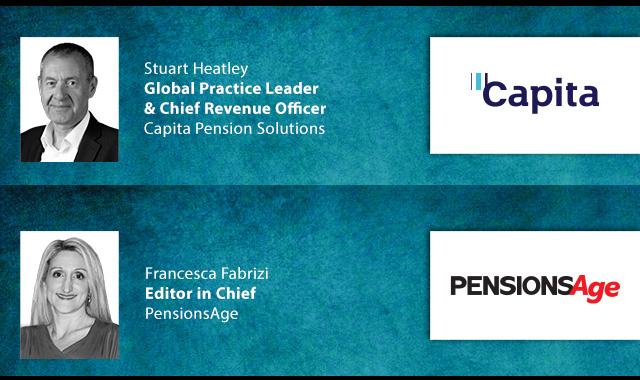
In the latest Pensions Age podcast, Francesca Fabrizi speaks to Capita Pension Solutions global practice leader & chief revenue officer, Stuart Heatley, about who matters most in pensions and how to best meet their needs




© 2019 Perspective Publishing Privacy & Cookies
Recent Stories